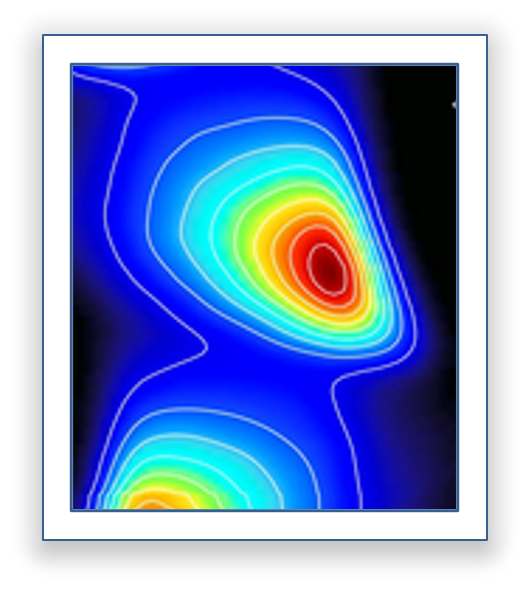
A small selection of what JC-PIC produces — phase-space and profile animations, wave spectra and swarm-mode plots exported straight from the diagnostic viewers. Each comes from a bundled test case you can load and reproduce in a few clicks.
A beam injected into a vacuum gap above the space-charge limit forms a virtual cathode that, beyond a second threshold, begins to oscillate.
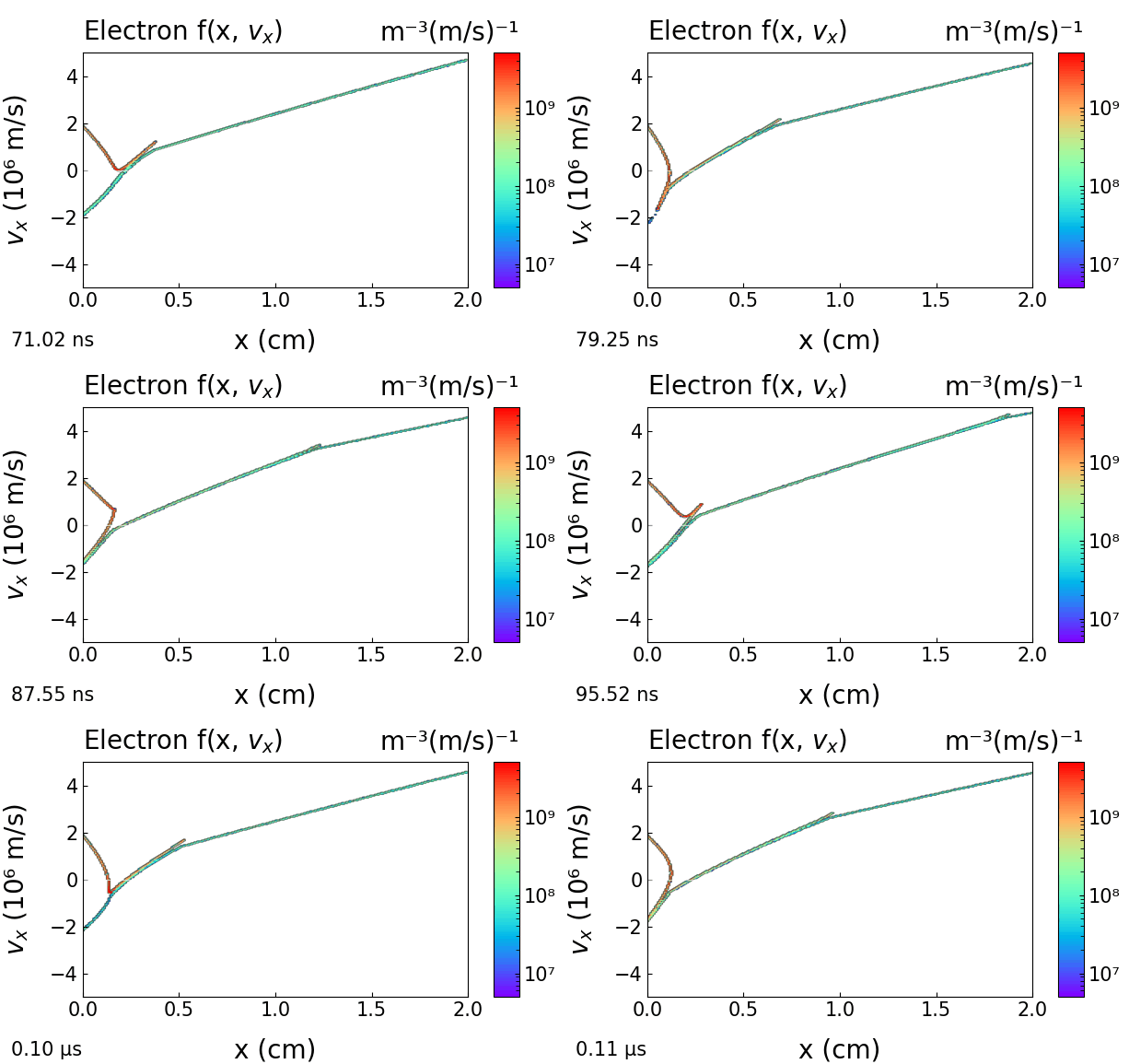
Electron phase space (x, vₓ). A beam injected above the space-charge limit builds a potential minimum that traps and reflects electrons, then oscillates.
📚 Case description in the Library →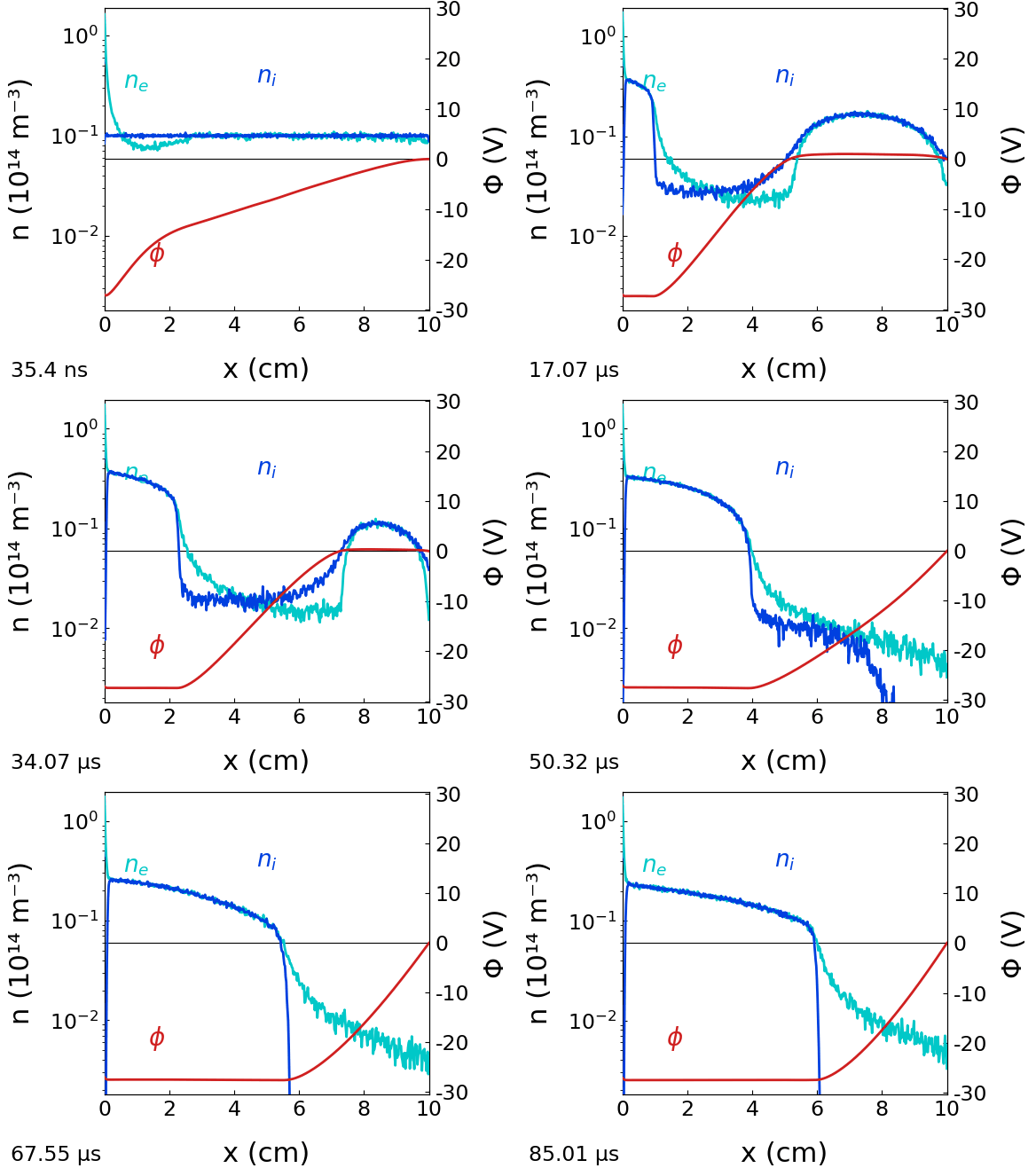
The electrostatic potential profile evolving in a low-current thermionic discharge, where ionization is spatially separated from the emitter by an internal double layer.
📚 Case description in the Library →In the temperature-limited mode, the beam accelerated across the cathode sheath drives a beam–plasma (Langmuir-wave) instability in the bulk.
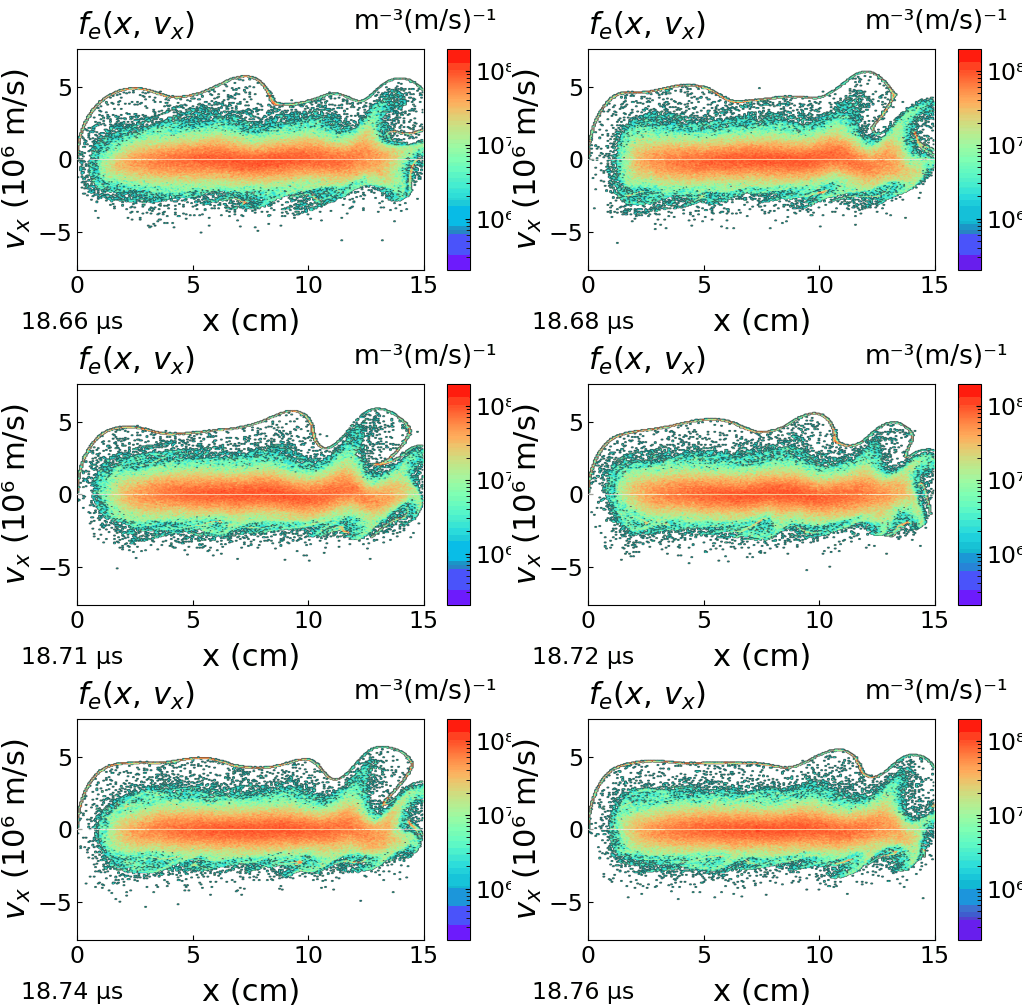
Electron phase space in the temperature-limited mode: the cold sheath-accelerated beam destabilizes against the bulk and rolls up into phase-space holes.
📚 Case description in the Library →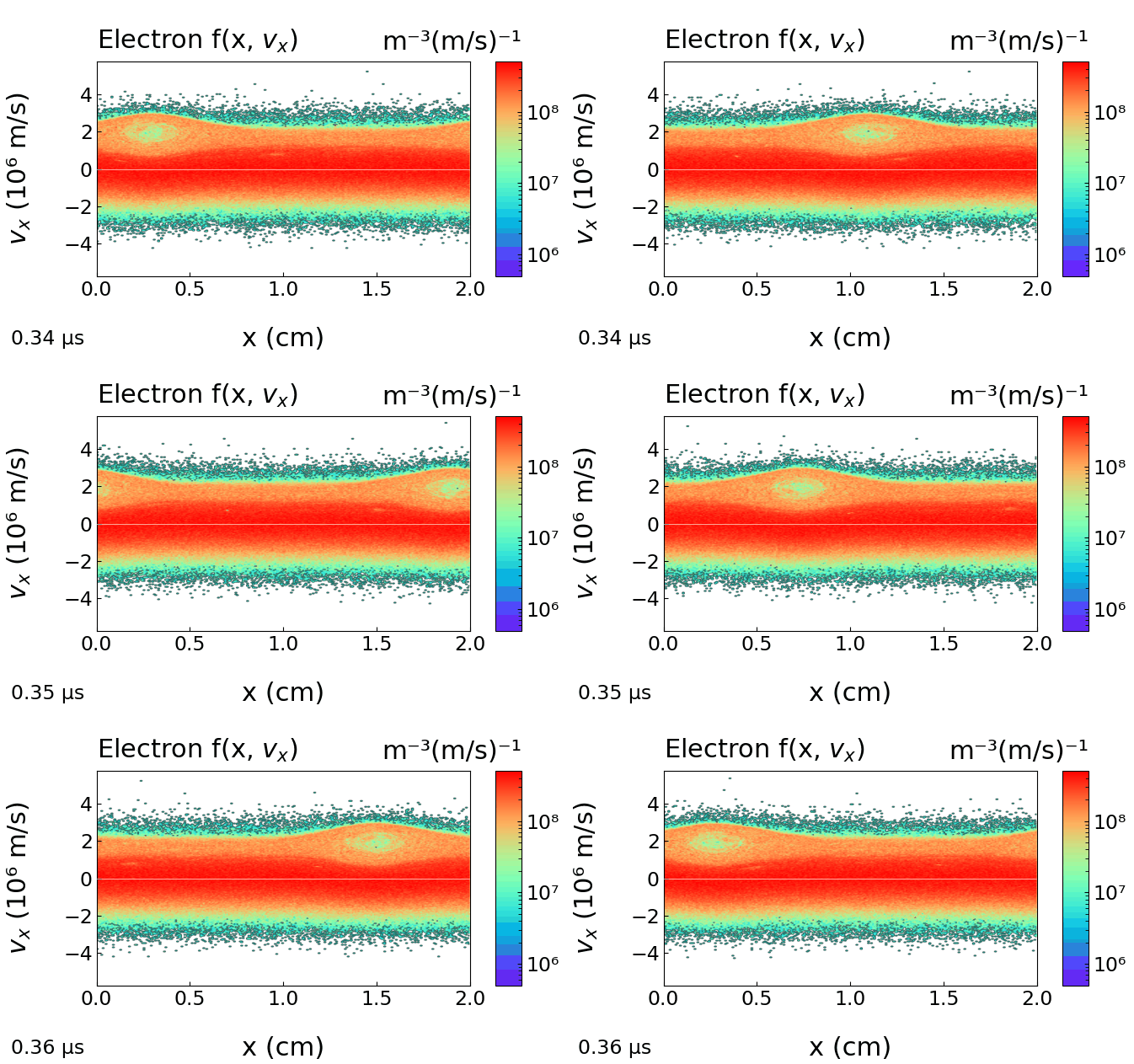
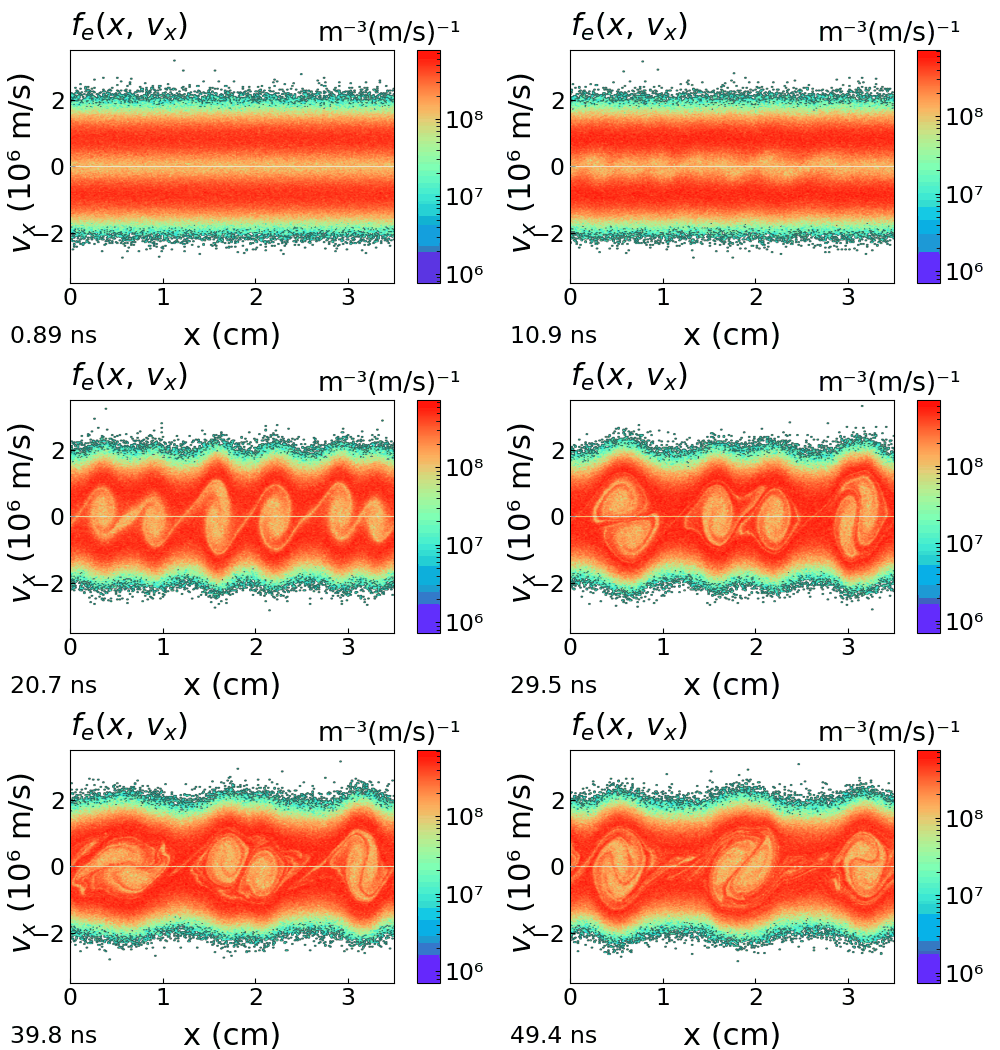
A dilute, high-velocity electron beam interacting with a dense stationary background — the classic two-population kinetic instability, in clean periodic form.
📚 Case description in the Library →The cleanest periodic-mode beam instabilities — the very phenomena one-dimensional PIC was first built to teach.
Two counter-streaming electron beams at ±v₀ through a neutralizing background. The free energy of their relative motion winds phase space into the iconic cat's-eye vortices.
📚 Case description in the Library →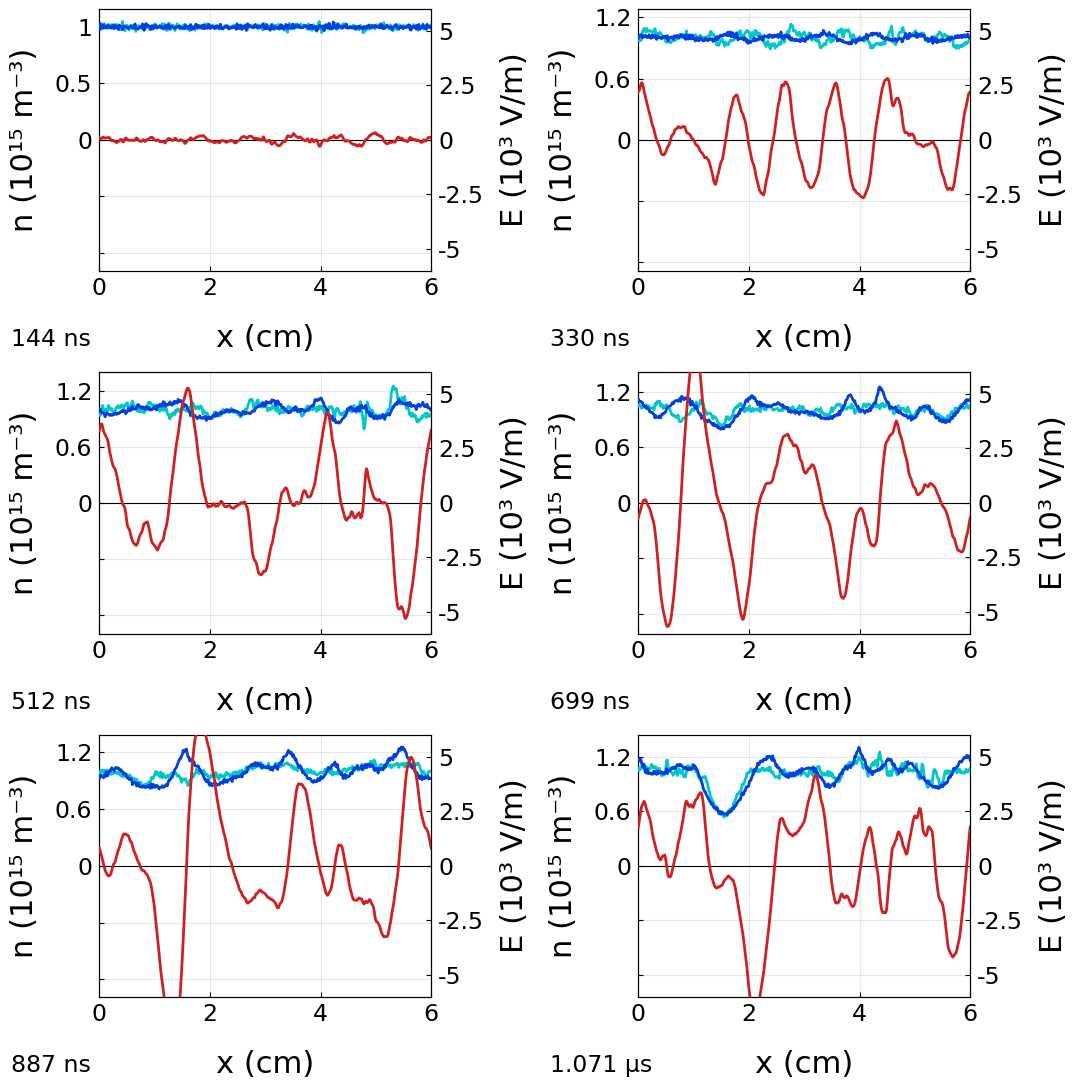
The electric-field profile growing as a global electron drift destabilizes against the ions — the instability Buneman discovered in 1959.
📚 Case description in the Library →These are just a handful of cases. Browse the full case library — RF discharges, striations, magnetized E×B plasmas and more, each with its documented description. See the user manual for the viewers.
Two of JC-PIC's quantitative faces: the built-in (k, ω) Fourier analysis of the space–time diagnostics, and the Swarm mode computing the electron transport coefficients of a Boltzmann solver by direct Monte-Carlo simulation.
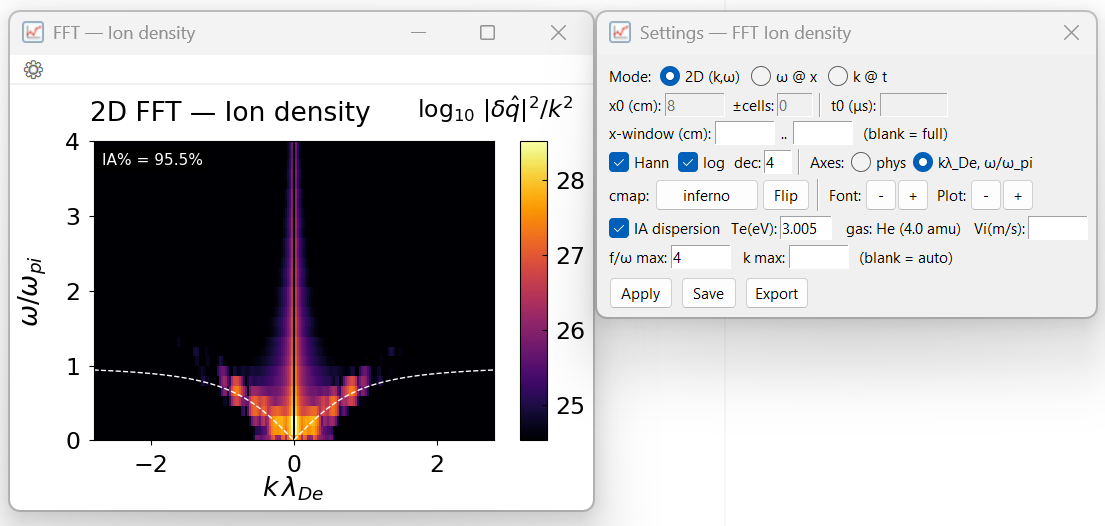
The 2D Fourier transform of the ion-density x–t diagram in a discharge generating ion-acoustic waves: the fluctuation energy lines up on the ion-acoustic branch, with the theoretical dispersion overlaid and the on-branch energy fraction reported.
📖 FFT Analysis chapter in the manual →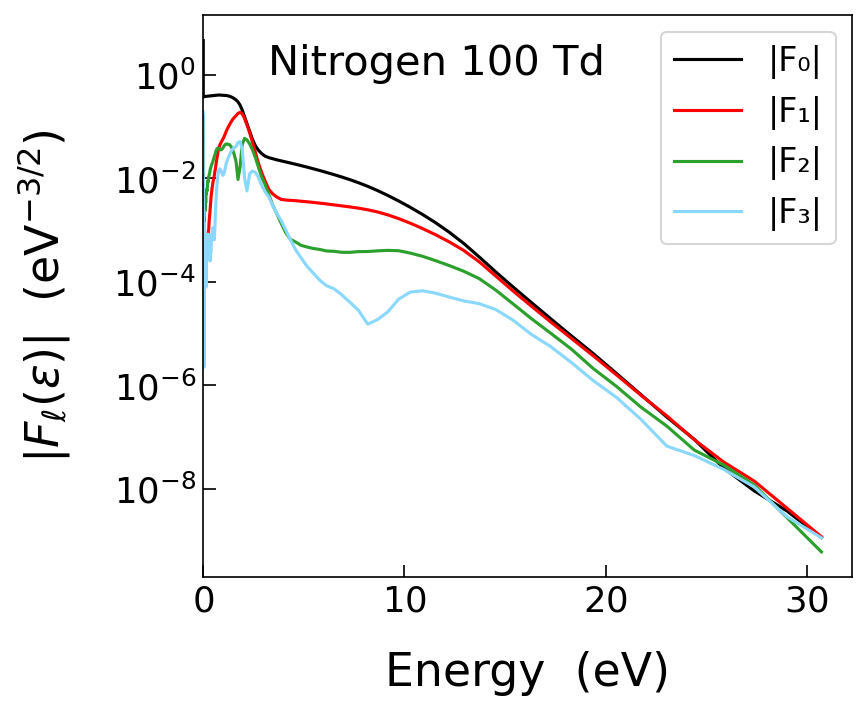
Legendre components F₀–F₃ of the electron velocity distribution in nitrogen at 100 Td, computed by the Swarm mode — directly comparable with Fig. 7(a) of the MCIG paper (Hagelaar, Phys. Plasmas, 2025), and a direct view of where the two-term approximation holds.
📖 Swarm chapters in the manual →